Leaderboard
-
PeterthePapercomPoser
Admin5Points2,940Posts -
gmm
Members2Points239Posts -
Rodrigo Ruiz
Members1Points14Posts -

SSC
Members1Points3,783Posts
.thumb.png.8b5b433a341551e913a34392660bc95b.png)

_Small-3.thumb.jpg.b0a4415d512176e6fbce5cfa1e8ad246.jpg)

Popular Content
Showing content with the highest reputation on 07/28/2020 in all areas
-
This is a Scherzo and Variations that I just finished. It is my first finished piece for piano and orchestra. Note: each variation is followed by a short (or sometimes not so short) piano cadenza. The theme is in 6/8. The first variation is a 2/4 variation of the theme. Variation II uses irregular meters and frequent meter changes. Variation III is a slow 3/4 version of the theme. Variation IV is in 2/4. Variation V is the finale and is a fast 2/4 version of the theme. It explores the triplet idea in fast runs up and down the keyboard. I didn't write this piece to be particularly difficult nor virtuosic but the final variation is the most difficult and there are moments in the other variations that are difficult. Overall I have to say that this piece is a little rough around the edges and the cadenzas could definitely use some more work, but I'm happy with it as it is and I don't know if I'll work on it more ever. I rarely revise my music, but I would really appreciate your opinions and suggestions. I have a midi instead of a score. Thanks for listening. For an updated version of this piece with score go here: ScherzoandVariationsforPianoandOrchestra.mid1 point
-
1 pointWhat a sad piece! Sounds like the introduction to a Requiem mass. I hope you expand on this - it has some emotional dissonances in it that I like.1 point
-
1 pointJust skimming this fugue on the surface - it seems to have some nicely developed episodes (as well as a decent bridge). I don't know your previous works but I like this one. You could have included more middle entries of the subject in my opinion (and going into an episode right after a middle entry isn't mandatory). This particular fugue seems to want to end in G major but then you force it back into E. There's some questionable chromaticism in this as well (if you're trying for a strictly Baroque fugue) around measure 41. Overall this is enjoyable though. Also it seems like you're trying to fill up all the space you can in this kind of contrapuntal writing, but space can be a very nice break from the constant onslaught of rhythms that you have. Thanks for the music!1 point
-
Thanks for listening and reviewing @gmm , glad you liked it overall! 😁 I have done three band pieces now, so I feel like I'm finally getting the hang of it. (Kind of.) You brought up some really good points. I actually went ahead and submitted it to the competition a few days early, so I can't go back and edit now, but I definitely will take a look at some of the stuff you mentioned after the competition is over. The overuse of bass drum and cymbal at the end is one I'm regretting now since you brought it up. As far as the piano goes, I think your criticism is fair. It was a bit of a balancing act between keeping the pianist involved while not relying too heavily on them throughout most of the piece. I actually think the phrase you mentioned at m. 82 is one of the weaker sections overall, and definitely weak for the piano. I just realized I needed to develop the second theme a bit more so it kind of got shoe-horned in there. Thanks again for listening and reviewing!1 point
-
really successful work and realistic sounds. For a more traditional sound, the effect of the piano can be reduced.1 point
-
Technically, the wind quartet is of the same scope as a string quartet i.e. can be anything. But yes, it could be the fact that you know more about the string quartet that makes it more difficult. It is incorrect to say that there are only a few woodwind-only pieces; Reicha, Danzi, and Briccialdi are noted composers with dozens between them. (You'll discover these more as you progress with your flute playing - Briccialdi is best known as the inventor of the Bb thumb key!) Writing idiomatically for wind ensemble is really difficult. Balancing timbres well and exploring tone colour are among the challenges. It's not just a string quartet with winds.1 point
-
Hi @Vogel! It's been a real pleasure chatting with you. Yes, definitely, take up composing. The right time is always 'now'. There's nothing else we have, right? I'm sure we'll continue to have many an intellectually and artistically rewarding conversation. In the meantime, receive my very best! RR1 point
-
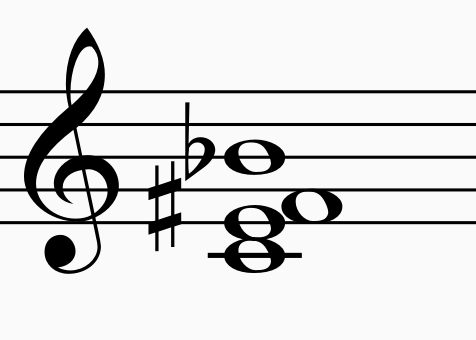
Really good work. I really like the way you blended the different colors of the ensemble. I've always shied away from writing for concert band because I've never been able to blend the vastly different voices very well, but you do a really good job here. I also like the variety of different modes you use. I think what might take it to the next level would be to try to use some more daring chords within these modal contexts. For example, at the beginning it looks like you use C lydian dominant for the first phrase or so. A chord that sounds really cool (at least to me) in lydian dominant is the one below: As I try to play the opening melody over this, I don't know that I'm too crazy about this particular chord here, but what I'm trying to say is some more "exotic" chords might add some extra harmonic flavor to the modes that you use. I like the way you used the piano to accentuate the harmony (arpeggios at m. 55) and to add color to melodic voices (m. 135 and m. 147) , but there are a couple spots that come across as a little "chamber music-ey" and I'm not sure if it was your intention - The chordal background in m.82 is an example. I also think the piano would not be heard over the high trumpets and snare/timpani rolls in m.73. In general you do a good job of this (brass chords at m. 116 is a really cool example), but I think it's a little overt in the brass at m.139. These arpegiatted chords kind of come out of nowhere to me; maybe if you used an "in 4" version of one of your melodies it would be more effective. Lastly, I felt a little overwhelmed by all of the cymbal crashes and bass drum hits at the end. Maybe if you cut these out in m.187-190 it would let the woodwinds play out a little more, and it would be more dramatic when they come back in with the brass. Thanks for sharing, will it be performed as part of the competition? If show please share the recording!
 1 point
 -
1 pointI'm not a professional composer, nor do I have a degree in music, or any musical "credentials" of any kind, but I think my answer might be useful nonetheless. The extent of my musical experience is as a member of band/orchestra throughout middle school and high school, and about 3-4 years of piano lessons within that time frame. There was a point in time, when I was about your age, where I thought I wanted to be a musician. As I got older and into high school, and found out what a career in music realistically looked like, I realized it wasn't for me. But I was still passionate about music, and I always took music along with me. I studied something completely unrelated in college and focused most of my energy on getting good grades and getting a good start on my career, but on the side I had an old version of Sibelius that I would tinker with from time to time. I never was able to complete anything substantial, but it was a good way to feed my creativity and keep my passion for music alive. Fast forward a few years, I'm started in my career, I've got a lot more free time now that I'm not engulfed in my studies, and I've got some extra cash from my job. So I say to myself, "You know, now that I've got my job and cash flow figured out, why don't I take another stab at composing in my spare time?" So I went online and did some research, and before long I got my hands on a DAW and some decent samples and was making music again. This time however, with the tools I have available, I am much more satisfied with the music I am making, and I can make pretty convincing audio files with the quality of samples available today. It's not as good as a real orchestra, but it's pretty cool to have an audio file of something I wrote that I can listen to in my car as I drive around town. The best part about this is I can write the exact kind of music that I want, whenever I want, without any restriction. If I were doing this professionally, I would have to write ALOT of music that I might not necessarily want to because the job requires it, I would have to make many artistic compromises with directors/producers/etc. that want a specific sound for their medium that I might not agree with, and I would have to meet strict deadlines, all of which would hinder my creativity. In addition, with the technology that exists nowadays it is entirely possible to make very high quality representations of your music using just your computer. Just listen to some of the audio on this site as an example. Does it sound as good as a live orchestra? No, but you can still produce a decent quality audio file that is enjoyable to listen to. I guess what I'm trying to say is it is very important to be fulfilled by the music you make. I can honestly say that even with the path I chose, I am still able to make music that fulfills my passion. Will my music ever be performed? Probably not. But I am incredibly satisfied with the music I am able to make with orchestral libraries I have available (and untrained listeners can't tell the difference from a live orchestra anyway lol). Had I chosen a career in music, I don't know that I would be making music that is as fulfilling as the music I make now. I have met a few professional composers that are burnt out and exhausted from writing music they are TOLD to write, instead of music they WANT to write. Putting a price tag on your passion changes everything, and I realized a long time ago that you should never sell something that you love. At your age you should be doing exactly what you're doing. Compose because it's fun. Explore your passion for music. But I would also say to try other things you might be interested in as well. Take an art class. Take wood-shop. Join the debate team. Get out of your comfort zone and try new things. As you get older, these opportunities will go away, so take advantage while you can. I'll touch on the career aspect below, but as far as skills go: curiosity. Always ask "why?" Why did this one composer structure this piece that way? That one part in this piece sounded cool, why is that, and how did he/she do that? Why did this instrument get the melody in this section? How did the composer achieve that really cool sound in this other part? etc. Also: learn, learn, learn. Get your hands on books and study. Harmony, counterpoint, orchestration, etc. Find scores from your favorite composers and study them. Do what they do. You will sound like them at first, but as you experiment you will develop your own voice. I would advise you to try to meet people that work as composers and ask them about their career. Ask them what their typical day is like. Ask them how they got there. Ask them what school they went to. Try to find out how much money you could expect to make. You need to be very aware of the lifestyle you can expect. This site is obviously a good source. Lastly, (and this is important), if you decide to go into music, pick the right school for you. But don't base this just off of what people say about the school, try to find people who graduated from that school and ask them about their career opportunities. Ask them what it was like to study music there, and what kind of jobs they got when they graduated. Try to find people that just recently graduated, people that graduated 5 or so years ago, and people that graduated 10 or so years ago. If you really want to be a film or game composer, but you find out that most people that go to that school become band directors, or lesson teachers, or something unrelated to music entirely, then you shouldn't go there. There's nothing wrong with any of those jobs, but it doesn't make sense for you to go to school there if you don't want to do those things. Sorry for the long-winded response, but I hope this helps at least a little. If you want any more advice, feel free to message me.1 point
-
1 pointI wish you had used some tempo changes or chords foreign to the key you're in to bring some more contrast to the music. Honestly, the melody sounds like you were just putting down notes. It would benefit your music much if you could whistle or sing the melody after you hear it. But that's just my opinion.1 point
-
Hi Maqalx! Sounds like you've made good use of the I II progression here. It's a very pleasant and liquid-y sound texture you've created. I can imagine things swimming in the ocean in slow motion. I wouldn't have minded if you included some actual ocean sounds in this as well, such as whale calls or dolphins, but I don't know - that might be a bit corny. Very nice!1 point
-
1 pointMost composers today who say they can't read music actual can, just not very well or it's just not the main way they do things. But to say Hans Zimmer and Danny Elfman can't read music is not entirely accurate, nor does it logically make sense considering their need to collaborate with notation-literate musicians and editors and publishers and copyright lawyers on daily basis. if you walked up to them and thrust a musical score in their hands, they won't find it an unintelligible mass of blobs. They're more than capable of identifying notes on sheet music. That's just not their main method of composing, usually. You might appreciate this video I found of Paul McCartney actually diving into his compositional process using a computer for his classical music. He too, can read music, he understands exactly what different pitches and chords are and what they sound like, but that's just their most natural and expedient method of creation. I can read piano rolls, I can read DAW timelines--but I'm slow at it and find it inefficient, for me. A composer should know as many information mediums as possible.1 point
-
1 pointHello and welcome to the general discussion forum here at YC. First, a word on moderation: The moderation staff of this subforum will NOT censor your posts or edit your posts for content as we also think the free and open debate of ideas is to be defended at all costs. However, general housekeeping rules will be observed (no spam, no outright trolling, posts/threads that don't belong in this forum will be moved, etc etc.) We will try to work as transparently as possible as we acknowledge that without trust in the moderation there's no chance for a good discussion to arise. The moderation staff is, however, free to engage in discussions as such but entirely outside of their capacities as moderators; don't be intimidated by the status and treat them like you would any other member. And now some things to observe when posting here. Keep in mind these are not outright rules, but rather they're flexible guidelines and we will always allow deviation if we see it is reasonable. Note also that we reserve the right to change any and all sections of this in the future without notice. (1) This is a music discussion subforum. This means that discussions/debates are not only welcome but encouraged. When making a new thread, make sure that the content of the OP can lend itself to discussion. Seems obvious, but it's important to remember this is not a miscellaneous forum for posting whatever doesn't fit elsewhere. (2a) Use the search feature. It is your friend. There have been many good discussions already and maybe the one you want to start is similar to something we already had. This shouldn't discourage you from posting, but if you are to post make sure to either reference to the archive or try to continue where it left off to some degree so that we don't need to always start from scratch every time. (2b) ... But do not revive ancient threads. Post a link to the archive thread instead and ask people to read it as well, but do not try to revive a thread from years ago. Good rule of thumb is that if the thread's last post was more than 5 months ago it's not a good idea to bring it back. (3) If you cannot contribute to a discussion, do not post. If the discussion is either too complex, or you think it's dumb, etc and you feel you need to post something but that something isn't an actual contribution, do not post it. (This includes "this is dumb guys stop discussing X" and general derailment posts.) Instead if you really want to post something, try to engage the discussion if only to give your viewpoint without having to attack anything. (4) Explain yourself. Opinions expressed shouldn't necessarily be backed by book sources or whatever, but it'd be certainly nice to know why someone holds such and such opinion. After all, before any discussion even exists we need to be clear on where everybody stands on the issue if they are to participate. Please do not assume positions of others if they were not clearly stated. This rule goes double for OPs of new threads, please try to be as thorough as possible in your exposition of the issue and pay attention to possible misinterpretations or conflicting terminology. (5) Be clear. Do not talk about "classical music," or "atonality," or whatever in broad general terms since this does not help understand which part of the rather broad topic you're referring to. Talk about composers, pieces, specific techniques, specific epochs (and composers) and tendencies instead. Refer to concrete musical examples if you must show something, rather than simply using a blanket statement and avoid generalizations if they point to possible problems down the road (eg: "20th century music is all atonal" or "pop music is too simple.") Also, of course, check that your terminology is properly used (check with the teachers here, or in help forums if you aren't sure!) (6) Research. Don't know what someone means by "isorhythm" or "baroque affects"? YC has a staff of teachers and help forums where you can ask just those kinds of things! Remember, ignorance is not a crime and being honest about what you do and don't know can go a long way towards avoiding problems. You should come here to discuss things, not ask for help (see no.1) therefore if simply do not have the knowledge to participate do try to do some research before jumping in if you must. (7) Be nice. Being ruthless in criticizing people's ideas can be helpful in any discussion, but never when it incites attacks and insults. Don't let discussions drag down to that level if possible. Don't understand someone's point or is someone misunderstanding your position? It is easy to get riled up in some discussions and forget that there's always time to slow down and try to check for possible misunderstandings or simply ask someone to explain their position in other terms. Likewise, if someone thinks you're not being clear and requests that you explain it better then by all means you should. Remember, disagreements are inevitable, but fights aren't. (8) Music/art is a complicated topic and many things are subjective! It goes without saying, but chances are someone will simply not agree with your position on something. Some discussion topics which are too dependent on taste will often fall short of genuine discussion (eg, "Favourite composer" type threads,) but almost all topics that have to do with music have a subjective element to them and it's inevitable that we reach for our tastes as well. Understand where each topic stands on that spectrum of subjectivity is crucial (eg, talking about how many strings the violin had in a period in history is not up to debate as much as how interesting it could be to write for violin.) Keep it in mind. (9) Have Fun! Finally, if you're not having fun, then you're doing something wrong. --- F.A.Q Q: What is regarded as "trolling?" Why is everyone calling eachother this? A: Unfortunately there's a bad habit in the internet at large that when a discussion isn't going your way you can just pull the "troll" card. This here is not acceptable and calling someone a troll is a rather serious thing to say as it invokes the moderation to act. Therefore, trolling here involves: A) Someone who is deliberately posting derail/disrupt posts that do not contribute to the topics they are posted in. B) Someone who flings insults around/attack members without any good reason (out of the blue, or not called for.) This is not the same thing as a thread degenerating into insults due to people being riled up by the discussion, as here the intent is to outright disrupt. C) Makes threads/posts purposely vague to bring up controversial topics in a way that pushes buttons rather than encourage reasonable discourse. (Eg: Atonality/composer/whatever sucks! threads.) If it doesn't involve these things, then it's not trolling and reporting it as such may get YOU in drama instead (specially if we catch you calling people trolls when you're just losing an argument.) Don't summon moderation unless you are absolutely sure as it can disrupt the thread just as much. Q) It sounds like a lot of work to do this discussion thing, why should I bother to look things up/be clear/check my terminology/consult others? A) If you plan to frequent the discussion area, people will pay attention to how you behave and if the quality of your posts isn't good then they'll also stop taking you seriously. It's entirely understandable that if someone refuses to research something yet keeps parroting about it they will lose respect and people will take to mocking or w/e. And really now, it's your job to avoid making factual errors or simply putting out silly arguments and we can't really do much if anyone else tears it apart and laughs. Q) But what if I just want to state my opinion without others commenting on it?? A) The moderation here isn't for protecting you from the backlash of your statements UNLESS they derail the thread entirely or become too abusive. Just like you can comment on others' opinions, be prepared to be commented on. If you do NOT wish others to engage your ideas then do NOT post them. Q) But I DO really think that all music after 1740 sucks and Mozart is the best composer ever! A) The forum isn't your personal blog. What you say has consequences and be prepared if you really go out and say stuff like this. Again, we will NOT protect you from yourself and you can expect to hear back opinions which are just as harsh. Q) I have a question, is this the right forum to post it? A) Is the question meant to be discussed by members, or only to help you? If it's for a discussion, then yes you should post it here. If it's only to help you we are glad to receive it in the Ask YC subforum. Thanks for reading and happy posting!1 point