
rbarata
Old Members
-
Joined
-
Last visited
-
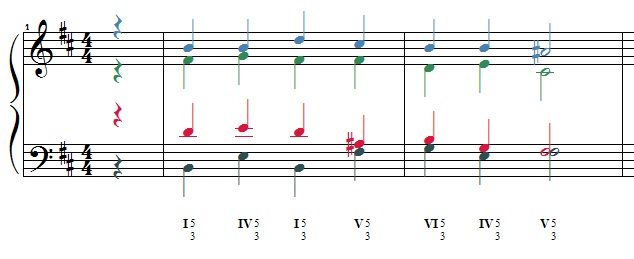
Hello my friends😀 I'm wondering how common is this. Is it something that you see frequently? The fact is that it sounds good, at least to me.:) My interpretation on why this sounds good is because the sec. dim chord base is the the relative minor scale of the tonic of the progression (the I in the progression) that, as you know, shares the same key signature. Am I thinking correctly?
-
My mistake. Thanks for point that out. Not familiar with the term escape tone but I think you're talking about the F in the upper voice. Am I right? Well, I had the fixed melody. I could use another note in the bass, an A for ex (a 6th, for A to F, but them I would have a large leap. I could also think about creating a 5th that that would result in a tritone (B to F). This one seemed the best choice on the moment.
-
...and I end up doing something I don't really don't know. If any of you can analyse it and give me some feedback, I'd appreciate. Thank you
-
Thanks for the reply, Monarcheon. Useful tips in your answered. I've noticed it too late. It should be a 5th and 3rd. I've noticed that in my writing by the time I was composing it, even in other pieces of mine. Something to take into account in future works. I've noticed it as I was writing. Consecutive 3rds limited to 3. Considering this, I left them unchanged but that's something I try to avoid. Thanks again.:)
-
Hello, my friends I'm trying to learn Palestrina by myself and I wrote the song bellow on which I try to follow his "rules" in a general way. I'm sure there are some issues with the piece but I would like you to ear it and comment on what you find, preferencially point to specific points in the piece. Thank you

-
Thanks for the reply, forte1320. :nod: This is just an exercise and some of the common rules are disregarded, at this point of the studies (I'm reading and making exercises from Arnold Schoenberg's Theory of Harmony). So, some "errors" on doublings and some other things are intencional. But, now talking about the program, the rules are according the classical textbooks and generally, when there's something wrong about doublings, it points a doubling error and not some other problem caused by it. Every error comes along with a brief explanation of why it is an error. In this case, it says the following: Bass and tenor may reach the maximum distance of two octaves. With open parts, the other pair of consecutive voices should be kept within the octave. With close parts, tenor and soprano should not overstep the distance of an octave. So, nothing is said between alto and bass. Thanks BTW, a link to the program site...it's freeware and very useful.http://harmonypractice.altervista.org/HPWebSiteEn/index.html
-
Hello, my friends Learning harmony on my own...I have a doubt why the voices marked in red are too spaced. I'm using a software to help me confirm my errors and it gives me this indication. Is this correct? Thank you
-
Well, the aim of this exercise is to connect triads in root position. Because some of the notes in soprano and bass do not allow this connection to be made according the basic rules, then I needed to find alternatives. What would like to know is if the alternatives I used are acceptable at the light of four-part writing. Thank you
-
Thanks for the replies. Yes, it's an home work. And what do you think about the solutions I've applied?
-
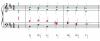
Hello, my friends I'd like to have your oppinion on this exercise I did. Bass and soprano are fixed and can't be changed. The key is B minor. Thanks
-
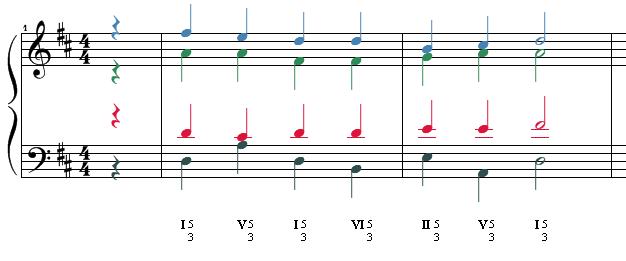
Thank you for your reply, Jared. I've learned that when two root position chords move by step, the thirds should be doubled. A typical example is the progression V-vi or vi-V (this case). So, I took this as an usual solution.
-
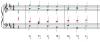
Hello, my friends I'm a self-didact in music theory and I would like some feedback in this four-part exercise. The soprano and bass is given and can't be changed. Plus, all chords must be in root position. I'm looking for unnoticed errors or better alternatives in specific points in my work. Thank you
-
Hello, my friends That's it.... in SATB, if I have a third in the soprano and also in the bass, which voice should I double...how to proceed? Thanks
-
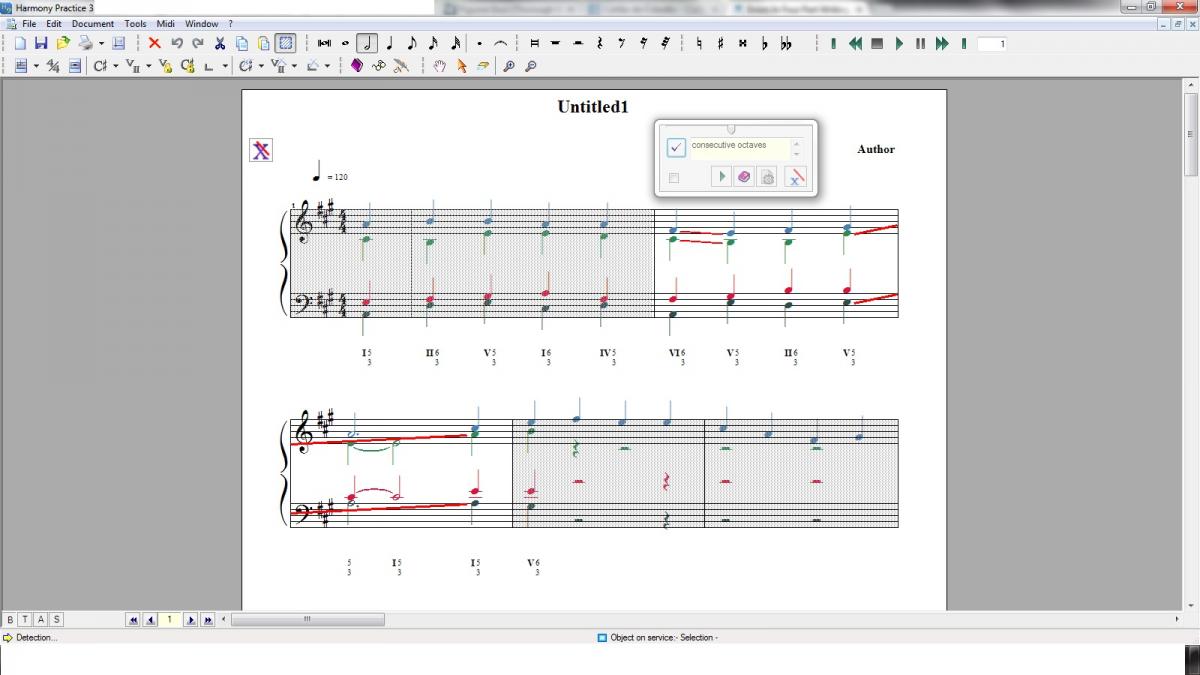
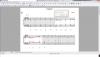
Here is the prt scr. As you can see, the program is marking an error of consecutive octaves between chord 9 and 11. Hence, the are not consecutive octaves. Thank you
-
Hello, my friends I'm learning four part writing with the aid of a program that, among other things, checks for errors and it tells me that I have consecutive octaves and fifths between non-consecutive chords. Is it like this? I thought the rules, at least most of them would apply only to consecutive chords. :veryunsure: